Tuesday, February 28, 2012

Rick Doesn't Like Skool

As mentioned in last week's post, Rick Santorum is neck-and-neck with Mitt Romney in the polls in Michigan and Arizona, and with that comes added media attention. That's why the comment that he "almost threw up" after reading President John Kennedy's speech about the separation of church and state from way back in October came back into the headlines, as well as his comment that President Obama is a "snob" because "he wants everyone in America to go to college."

The "snob" comment is especially curious, considering that Santorum himself hold a Bachelor's degree, M.B.A., and J.D, and by his own admission encourages his own children to go to college. Santorum also misconstrued the President's words about "higher education" to mean only "college." President Obama clearly was also talking about getting more Americans to attend community colleges, trade schools, and vocational institutions, as well as helping those to obtain a four-year degree from a university. Santorum then took his argument into demagogue territory by saying that people don't need "some liberal college professor trying to indoctrinate them," and that the President wants people to attend college to "remake" them "in his image."

While I think that what Santorum said was purely to score political points from the "Tea Party" faction of the Republican Party, I can only view his comments as hypocritical and disgraceful. Many families, including my own, view higher education as the key to social mobility. In this globalized economy, having something beyond a high school diploma is virtually a prerequisite for getting a decent, well paying job. Statistics don't lie: for those who have less than a high school diploma, unemployment is 15%, those with a high school degree--9.5%, with an associates degree--7.5%,  while those who have a Bachelor's degree or higher are only 4.4% unemployed. Why aren't these numbers mentioned more on the campaign trail? Why is it that no candidate, Barack Obama included, has explicitly tied education with employment? Probably because, in this day and age, people want to be instantly gratified. 7,000 high school students drop out of high school every day in America. Getting an education is, and should be, hard. If most Americans won't make the connection, why should their politicians?

Santorum said some incredibly ignorant stuff when he was talking to that "Tea Party" group, but his statement that "not all folks are gifted in the same way," is absolutely true. Not everyone should go to college. I know plenty of people who have no business being on campus. That's OK. But absolutely everyone should have the chance to obtain a higher education--college, trade school, community college--regardless of their standing in life.

Sources:

-Article About High School Dropout Rate
-Unemployment Statistics By Educational Attainment
-Obama Comments on Higher Education
-Washington Post Article on Rick Santorum "Snob" Comments

Monday, February 20, 2012

Mitt's Motor City Problem

Problems keep mounting for Mitt Romney. Since his defeat in three primaries a few weeks ago, he is now trailing Rick Santorum in the latest Michigan primary polls by roughly 4%. This is a huge problem for Gov. Romney because he was born and raised in Bloomfield Hills, Michigan, an affluent suburb of Detroit.

Part of this may be due to an op-ed he wrote back in 2008 when the American automotive industry was on the brink of collapse. Published in the New York Times, the piece was titled "Let Detroit Go Bankrupt." Uh oh. Considering how far the industry has come since its dark days, and how important the industry is to the state's economy, it's no surprise that Mitt is having to eat those words.

In Romney's defense, the title of the article is a tad misleading. I think that most readers of that headline would infer that Romney thought that General Motors and Chrysler should be liquidated, with millions of jobs being lost in the process. This would be called a Chapter 7 bankruptcy, where all assets are sold and the business officially closed down permanently. What he actually proscribes is a structured, Chapter 11 bankruptcy. A Chapter 11 bankruptcy entitles a corporation to restructure the business so that it will be able to become profitable again. Either way the federal government was going to be involved, it was just a choice of whether it was the Judicial or Executive branch.

Regardless of what the actual details are, Mitt Romney is in a very dangerous position. Being from western Pennsylvania, Santorum can at times be very effective when communicating with blue collar workers. Many of the voters in Michigan's primary will be those types of people. Being a multimillionaire who has the appearance of being out of touch with many voters will not score Romney any points in this primary.

Sources:

-Mitt Romney's NY Times Op-Ed
-Michigan Primary Polls
-Information on Chapter 11 Bankruptcy

Monday, February 13, 2012

Republican Speed Dating!!!

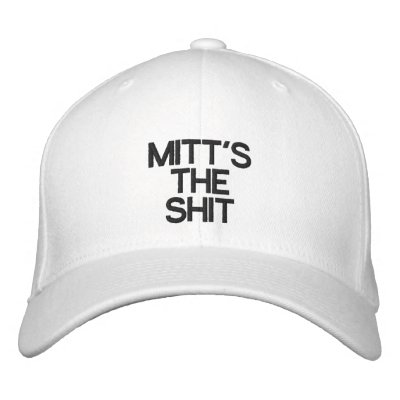
It is looking increasingly like many Republican primary and caucus voters don't exactly feel that "Mitt's the shit." After he handily won Florida and Nevada, it appeared as though Republicans had resigned to the fact that Mitt has too much money and too good of an organization not to win the nomination. Nope. Enter Rick Santorum, the Pride of Penn State, to shake things up. 

For the record, I don't think that Santorum or Romney are bad people. They both seem like very traditional, straight-arrow family men. There is nothing wrong with that. They both are, however, incredibly boring. It's a shame actually. When Santorum actually talks about the plight of the middle class, and how blue-collar American's are suffering, he really is able to make quite a connection. Then he inevitably makes the connection that the nation's economic problems are primarily due to the destruction of the family in our society. Which leads him into talking about homosexuality and abortion, where most voters think he is bat-shit crazy. Mitt Romney always comes across and cold and calculating, seeming to be guided by the principal that the voter is always right. That rule may be true in business, but on the campaign trail, people like to know that you stand for something besides....whatever they want you to stand for. 

Newt Gingrich has far too many skeleton's in his closet (the late 1990's were the golden years for 24-hour news television, with Newt and Bill Clinton having their personal baggage being laid out for all to see), while Ron Paul is totally rejected by many primary voters because they find his foreign policy completely irresponsible.

Despite Romney not being an "exciting candidate"(Can a Mormon be exciting?), the man is immensely qualified to run for public office (CEO of Bain Capital, head of the 2002 Winter Olympics, Governor of Massachusetts), and the only one who stands a chance of not being crushed come November. Too bad he has to beat the other three before he is able to focus on President Obama.

Sources:


Monday, February 6, 2012

Tough Times Ahead

The latest employment statistics that came out at the end of last week seem to indicate that the United States is moving in the right direction. The unemployment rate fell to 8.3%, going lower for the fifth straight month. However, all is not rosy in America. According to Paul Krugman, "we started 2012 with fewer workers employed than in January 2001-- zero growth after 11 years," and the percentage of long-term unemployed workers "remains at levels not seen since the Great Depression." 8.3% is the number that gets all of the press, but when you factor in what the Bureau of Labor Statistics terms "discouraged workers", or people who have stopped looking for a job, the real unemployment rate is 9.7%. Having basically 1-in-10 unemployed is extremely disheartening. With the persistent risk of a financial meltdown in Europe also hanging over the US economy, I think the experts who were pessimistic about the financial recovery in America will unfortunately be proven right at the end of the year.

All aspects of the world today are more connected than ever. None more so than the globalization of the world's trade. In times of plenty, a globalized economy can benefit everyone. Stock markets were booming and virtually anyone was able to supposedly "afford" the house they always dreamed of living in. Economists today talk about getting the country back to an economy that will be stronger than the one we had before the 2008 financial crisis. I don't see how this is possible. If we learned anything from 2008, it's that our empire was built with fools gold. Our fools gold was phony credit. Globalization is a double edged sword. The price of being so connected to the rest of the world could very possibly slow, if not outright ruin, the U.S. economy. You can bet that all of this is being watched very closely by all parties involved in the U.S. election. The economy taking a turn for the worst in the latter part of the year is the only roadblock to President Obama's re-election. Stay tuned.

Sources:

-The Bureau of Labor Statistics' Employment Situation
-Percentage of "Discouraged Workers", plus the unemployed
-Paul Krugman's Opinion Piece on February 5, 2012

Tuesday, January 31, 2012

Second Amendment Smackdown!

After that last post everyone must be feeling that I am a "liberal" or at least a "progressive." You are probably not going to think that so much after this post. Besides, there are only so many times that I can let my roommate call me a "Democrat" for embracing tax reform before I need to flex some conservative credentials.

Early last year, Congresswoman Gabrielle Giffords was critically wounded in a vicious shooting in Tucson, Arizona by a deranged lunatic. After this happened, just like after the 2007 Virginia Tech shootings, debate was started up about gun control, or the lack thereof, in the United States. While I certainly many others felt that this shooting was appalling, I feel that many laws on the federal level that have been enacted restrict a citizen's Second Amendment right to bear arms. In my view, the debate over gun rights should be centered on the state and local level. Why should Wyoming have the same type of  gun laws that Washington, D.C. does? Undue federal regulation makes no sense from a purely practical standpoint.

I don't believe that any firearm or "class" of firearms should be outright "banned" by the federal government. Banning "assault weapons" and especially handguns won't stop criminals from being able to get their hands on these weapons, it will enable a "black market" for these types of firearms to take hold--without any background checks taking place. Additionally, the National Institute of Justice has stated that "assault weapons" were used in only about 2% of gun crimes. Does it really make senses to outright ban something when they have hardly any effect on violence in America? Is it fair to punish the vast majority of gun owners who are law abiding because these firearms are given a "scary" name? This argument is preposterous. Maybe we should be more focused on the core reason for violence in America: that the vast majority of people who resort to violence do so because they are in poverty. Maybe the lack of upward mobility in this country is what is inspiring some to do violence to others.

In recent years, the Supreme Court has handed down two landmark rulings in favor of citizens being able to possess handguns in their homes for self defense purposes. In "District of Columbia V. Heller", a landmark ruling in 2008, the Court affirmed the right to legally bare arms for self defense in federal districts. Second Amendment rights were expanded in 2010 with the "McDonald v. Chicago" ruling that extended the principal of the "Heller" ruling to individual states. Clearly, the high court stood by the principal that the Second Amendment should not be infringed. Although many may think that there is no reason to own a gun, it is fundamentally wrong to reject a constitutional principal that has been enshrined for over 200 years. Just because some view a particular legal provision as "inconvenient" does not mean that we shouldn't honor the legality and the principal of that provision. The only way to change this would be to amend the constitution to repeal the Second Amendment. Good luck getting that through Congress.

Although I favor being able to own a firearm, some of the rhetoric from the pro-gun lobby goes too far and defies common sense. Take, for example, the National Rifle Association's Institute For Legislative Action's statement that it "opposes legislation to prohibit the possession of firearms by people on the (FBI Terrorist) watchlist because the FBI will not say who is on the list or why", an assertion that I find absolutely absurd. Being able to exercise one's Second Amendment rights should be both legal and common sensical.

Sources:

-National Institute of Justice's Study on the Effect of the 1994 Assault Weapon's Ban
-The NRA's "Firearm Fact Card"
-Washington Post article on "District of Columbia v. Heller"
-PBS Interview concerning "McDonald v. Chicago"

Thursday, January 26, 2012

Mitt's Cash

Last weekend, my roommate and I had an argument. I told him to go to politicalcompass.org, a website that gauges where an individual stands on the socioeconomic spectrum by asking how strongly you agree or disagree with a particular statement. We either completely agreed or mostly agreed on virtually every statement that was presented except for one: "the rich are taxed too highly." He strongly agreed with that statement, whereas I marked "Strongly Disagree". Name calling ensued (the word "Democrat" and the phrase "You hate poor people" were thrown around freely. I guess to advocate any type of increase in taxes make you a "liberal" in this day and age.), though luckily a fight didn't break out (even though he likes to tell everyone that comes over that he was "this close" to kicking my ass. I'll take that challenge any day of the week.). Coincidentally, the very next day Mitt Romney agreed to release his tax returns.

The media's newest fixation seems to be on the fact that he paid 14% in taxes the past few years. He is able to pay taxes at the low rate because most of his income comes from investments, where long term capital gains are taxed at a maximum of 15% for families making over $70,700. For those who earn over $388,000 in income, the effective tax rate is the much higher 35%. Some people would say that increasing taxes on the rich would harm the "job creators" at the very top of the economic spectrum. Never mind that the Bill Gates' and Warren Buffet's of the world say that they don't pay enough in taxes. Or that under the Clinton administration, the effective tax rate on income was 39.6% and the tax rate on capital gains was 20% and the United States had a booming economy. The Heritage Foundation, a conservative think tank, annually publishes its "Index of Economic Freedom", listing the countries from top to bottom that are considered the "most free nations" for businesses and individuals. Australia is listed as number 3 and has an effective income tax rate of 45% and has a national sales tax rate of 10%. The United States is listed as 10th with a lower income tax and no national sales tax. The "land of the free" is apparently no match for the "thunder from down under" when it comes to "economic freedom". 

One tax that needs to be substantially lower is the corporate tax rate. Switzerland's maximum corporate tax rate is 22%, while South Korea's is a flat 24%. At 35%, the United States is uncompetitive with the rest of the developed world. lowering this tax rate would help to bring corporations who do business overseas because of this unfavorable tax rate back to our shores. This is the tax that we should be talking about lowering because in my view the "job creators" are corporations, who's job is to hire individuals to do their work, rather than wealthy individuals who's job is to make more money. 

Sources: